If you're shopping for a home infrared sauna or a traditional sauna, the two types feel similar from the outside — a wood-paneled room you sit in to sweat — but they heat you in very different ways, at different temperatures, and at different running costs. Here's how they actually compare.
How Each One Heats You
Traditional Saunas: Heating the Air Around You
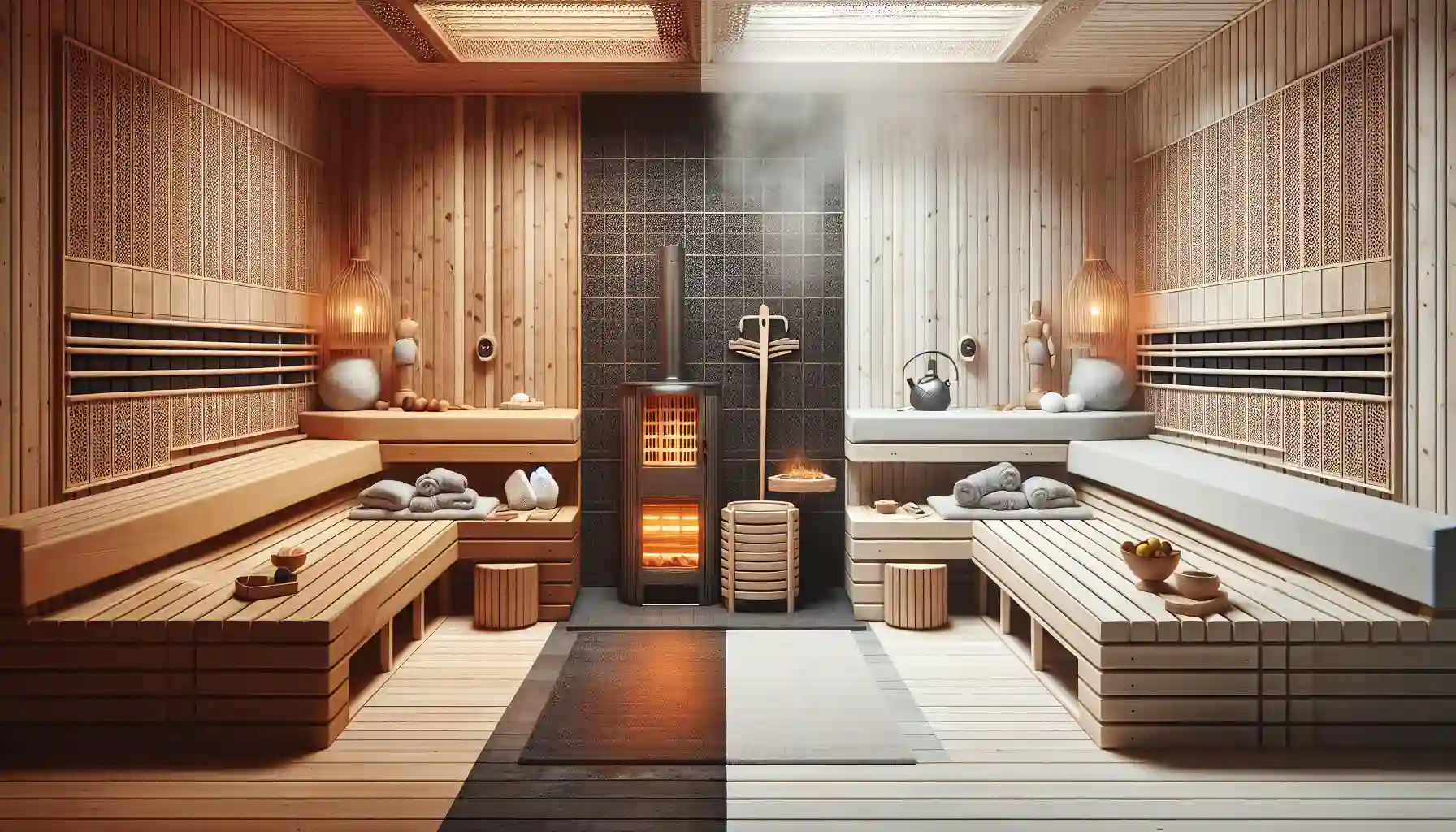
A traditional (Finnish-style) sauna heats a pile of rocks with an electric or wood-fired stove; the hot rocks warm the air in the room, and you can pour water over them for steam ("löyly") and added humidity.
Air temperature: 150–195°F (65–90°C)
Humidity: Adjustable, from dry to steamy depending on how much water you pour
Heat-up time: Roughly 30–60 minutes to reach temperature
Infrared Saunas: Heating Your Body Directly
An infrared sauna uses infrared panels to warm your body directly with radiant heat (the same type of heat you feel from sunlight, without the UV), rather than heating the surrounding air.
Air temperature: 120–150°F (49–65°C)
Humidity: Low — no steam is generated
Heat-up time: Roughly 10–20 minutes
Infrared vs Traditional: Side-by-Side
| Traditional | Infrared | |
|---|---|---|
| Air temperature | 150–195°F | 120–150°F |
| Heat-up time | 30–60 min | 10–20 min |
| Humidity / steam | Yes, adjustable | No |
| Typical power draw | Higher (heats full room air volume) | Lower (panels only) |
| Ceiling height needed | ~7 ft standard | Often 6'–6'6", cabin-style |
| Electrical | Usually dedicated 240V circuit | Smaller cabins often run on 120V; larger ones need 240V |
What the Research Actually Supports
Regular sauna use — the research is mostly on traditional Finnish saunas — has been linked to lower cardiovascular mortality risk in long-term population studies, including one published in JAMA Internal Medicine. That's an association from observational data, not a guarantee for any individual, and it doesn't tell us whether infrared saunas produce the same effect, since far less research exists on infrared specifically.
On "detox": sweat is mostly water and electrolytes. Your liver and kidneys do the actual work of filtering your blood, and there's no strong evidence that sweating in either type of sauna meaningfully increases toxin elimination. Claims that one type "detoxes" better than the other aren't well supported — treat sauna use as a comfort and relaxation habit, not a substitute for medical treatment.
Pros and Cons
Traditional Sauna
Pros: the classic high-heat, steam-capable experience; well suited to groups; the most-studied sauna format.
Cons: intense heat isn't comfortable for everyone; 30–60 minute heat-up; higher electricity use; usually needs a 240V circuit.
Infrared Sauna
Pros: lower, more tolerable air temperature; heats up in 10–20 minutes; lower running cost; smaller indoor infrared cabins often work on a standard 120V outlet.
Cons: no steam/humidity option; less long-term research than traditional saunas; some purists prefer the classic Finnish experience.
Sauna Safety
Both types are generally safe for healthy adults when used sensibly: stay hydrated, start with 5–10 minute sessions and work up gradually, avoid alcohol before or during use, and get out if you feel dizzy or unwell. The Harvard Medical School guide covers this well. Pregnant women, anyone with an unstable cardiovascular condition, a fever, or an open wound or skin condition should check with a doctor before sauna use, in either type.
Which Should You Choose?
Pick traditional if: you want the classic steam-capable experience, you're outfitting a space for group use, or you have the ceiling height and electrical capacity for a dedicated 240V heater.
Pick infrared if: you find high heat hard to tolerate, you want a faster heat-up and lower running cost, or you're fitting a cabin into a smaller indoor space. See our sauna sizing guide to find the right footprint for either type.
The Bottom Line
Neither type is objectively "better" — a traditional sauna heats the room around you for an intense, time-tested steam experience, while an infrared sauna heats your body directly at a gentler temperature with a faster heat-up and lower running cost. Match the type to your heat tolerance, available space and electrical setup, and either one can become a regular part of your routine.